
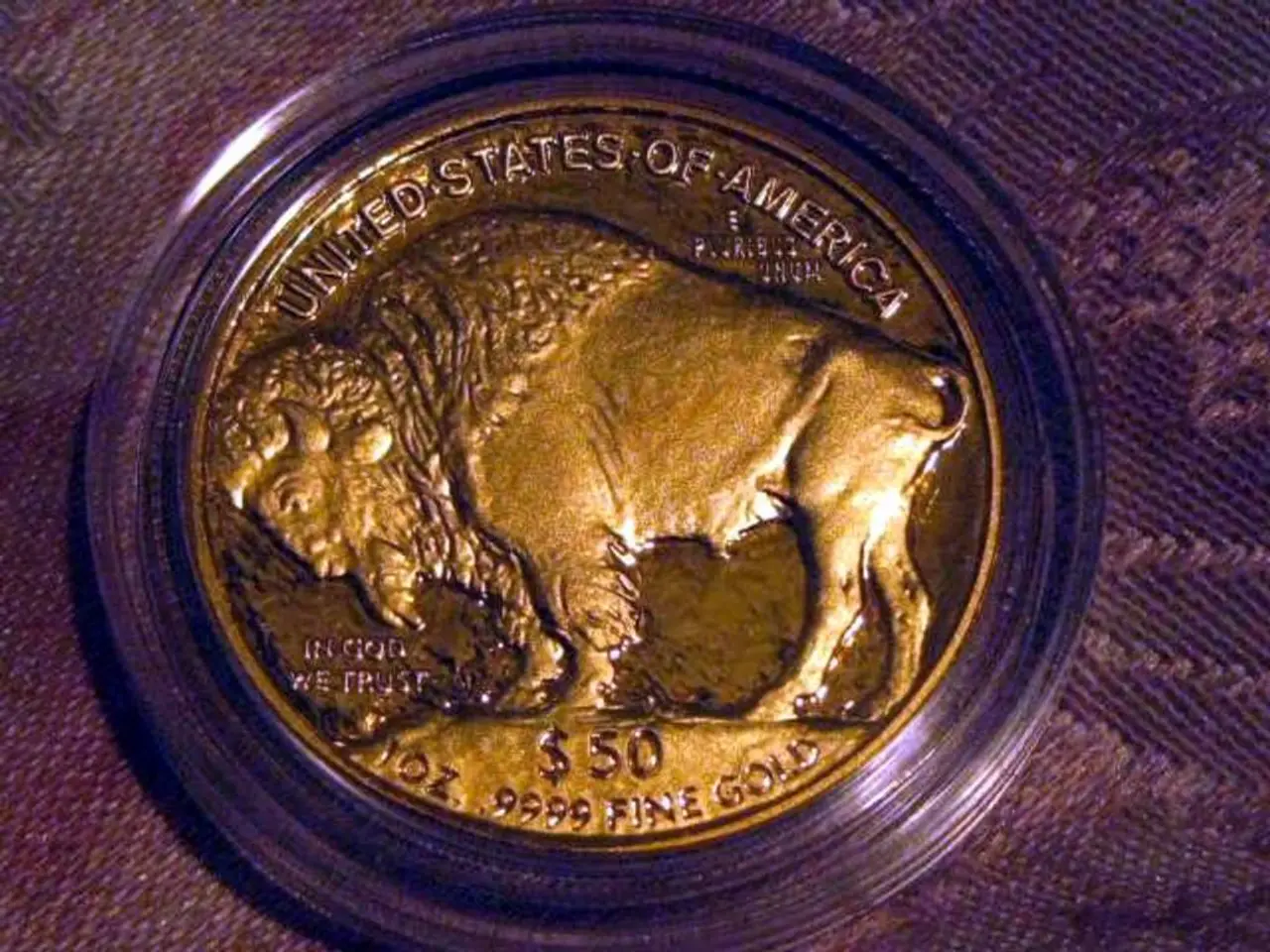
Trump reportedly abandoned the use of the U.S. dollar, a surprise move that deviated from public expectations
Currency Chaos: Trump's Tariffs Gamble Losing Steam
It's been a rocky ride for the greenback in 2025, with the almighty American dollar hitting a 5-year low. Despite the stock market's recovery from its Trump-triggered plunge, the dollar continues its downward spiral. Experts are quick to point fingers at the President's controversial tariffs as the culprit for this financial upheaval.
Initially, financial pundits anticipated that Trump's reign would boost the dollar. The forecast?
Tax breaks would fuel economic growth.
Tariffs would curb foreign imports demand.
However, the dollar has shown signs of weakness. Trump's erratic tariff tribulations, along with his unpredictable actions to enforce, suspend, escalate, and abate them, have introduced a chokehold of uncertainty in markets, leaving investors struggling to make sense of the American economy's future. As experts put it:
"Uncertainty is a sore spot for investors."
But the real sting is in the tail: there's a nagging question brewing in economic and financial circles: could this apprehension be slowing down the growth of the U.S. economy?
The dollar's dwindling power could also raise doubts about its coveted position as a 'safe haven' - a reliable investment haven in times of economic or political upheaval. The concern?
Foreign investors of American bonds have a yen for a robust dollar to pad their gains when converting profits into their native currency. A sagging dollar squishes their returns from investments. As demand for the dollar dwindles, the yield on Treasury bonds could skyrocket, jacking up the cost of borrowing for both the U.S. government and consumers.
Investors' confidence is wavering, triggering a crisis of confidence in the U.S. as a country, with doubters questioning:
The comfort of the U.S. as a reliable destination for global capital "is cracking" in recent months.
The unpredictable nature of the American administration makes it tough for investors to stake their claim on the U.S. market.
The dominance of the dollar as a reliable currency is being called into question... This doesn't mean that the dollar will lose its throne or be completely toppled. However, its reign of supremacy might be eroding at a faster clip than previously anticipated.
PATREON | Support the site
Charter-97
Subscribe to the channel Write a comment 6*
Also follow Charter97.org on social media
- YouTube
- X.com
- VKontakte
- OK.ru
- RSS
- Telegram
Enrichment Data:
Overview:
The weakening dollar in 2025 stems from multiple factors, bucking expectations of its growth during the Trump administration. Here are the primary drivers of this dollar slump, their implications for the U.S. economy and the currency's 'safe haven' status:
Factors contributing to dollar weakness:
- Economic Growth Concerns: Worries about slowed economic growth in 2025 and 2026, possibly resulting in a recession, have undermined investor confidence in dollar-based assets. This has pushed investors to diversify into non-dollar assets such as gold and other currencies.
- Federal Deficit & Fiscal Policy: Concerns about the expanding federal deficit and the stability of the U.S. financial system have weakened demand for dollar-based assets.
- Tariffs & Trade Policy: The use of tariffs by the U.S. has generated uncertainty, affecting the dollar's performance. However, with some of the harsher tariff rhetoric softening and progress in trade negotiations, a portion of these concerns has dissipated.
- Currency Hedging: Currency hedging by non-U.S. investors, particularly from Asia, has played a role in the dollar's decline. This activity increased after U.S. tariff announcements in April 2025.
Impact on U.S. Economy:
- Inflation & Import Prices: The weaker dollar raises the cost of imports for Americans, potentially leading to higher inflation, which could impact consumer spending and overall economic activity.
- Stock Market Performance: A weak dollar could be negative for U.S. stocks if it signifies loss of faith in the U.S. economy. However, it can also stimulate exports and fuel economic growth. Nevertheless, dollar weakness tends to be bearish for stocks if it coincides with a recession.
Challenge to the Dollar as a 'Safe Haven:
- The dollar's 'safe haven' status is being questioned as investors diversify into other assets and currencies. Central banks are also diversifying their reserve holdings away from the dollar.
- Despite this, the dollar remains a significant reserve currency and a 'safe haven' during global turmoil. Its position is altering, however, as other currencies and assets gain traction.
In summary, the dollar's weakness has far-reaching implications for the U.S. economy and its role as a reserve currency, but it remains a cornerstone of international trade and finance.
- The President's erratic tariff policies have introduced uncertainty within the markets, potentially slowing down the growth of the U.S. economy, as the concerns over its impact linger.
- The weakening dollar could lead to a significant challenge to its 'safe haven' status, as foreign investors of American bonds lean towards stronger currencies to secure better returns.




