
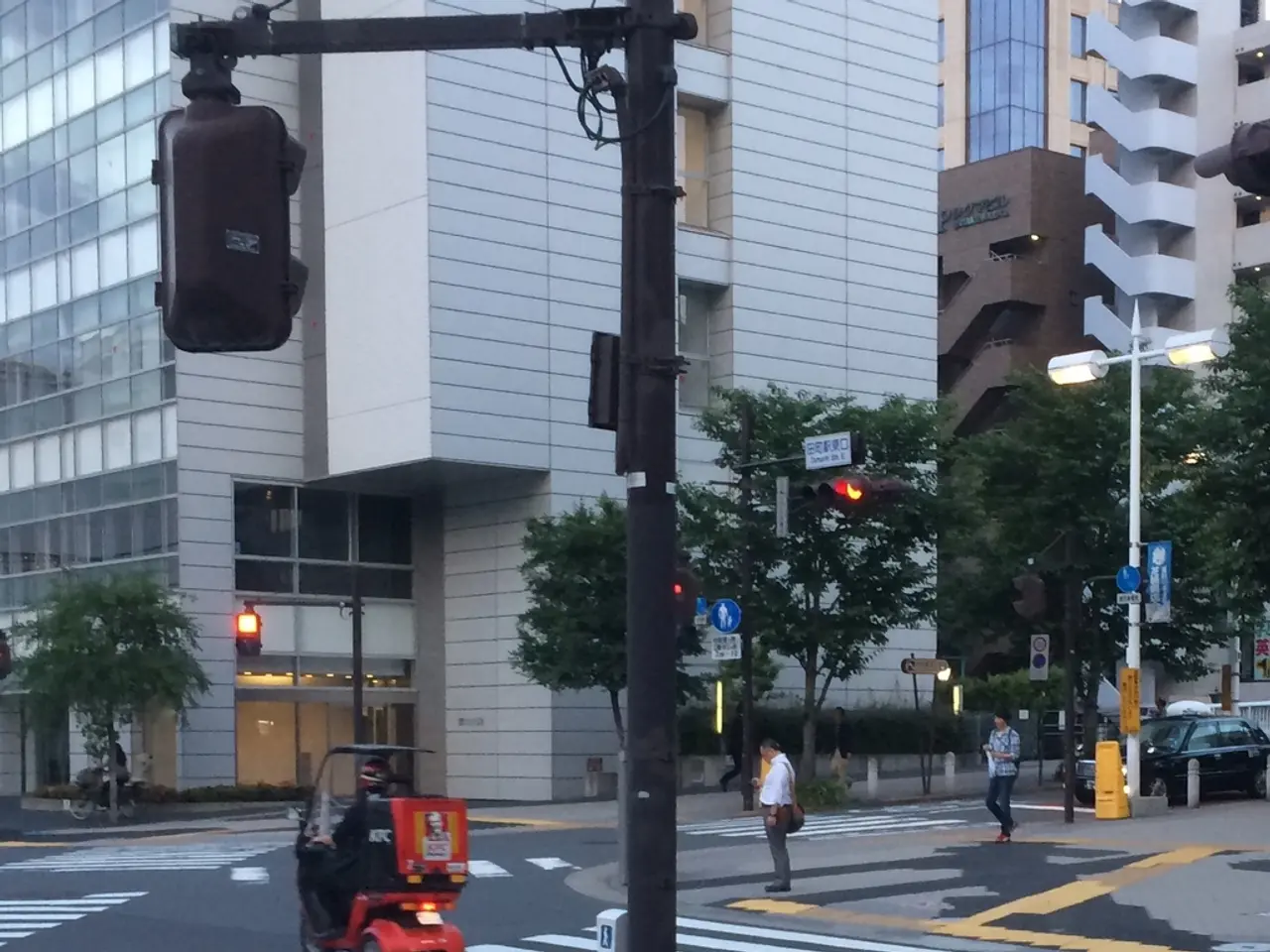
Surprising Toronto Traffic Regulations: A Look at E-Scooters, Pedestrian Signals, Pet Ownership, and More
In the province of Ontario, traffic laws extend far beyond the typical public roads. Here are some lesser-known rules that drivers and pedestrians should be aware of.
Firstly, it's important to note that the Highway Traffic Act (HTA) applies not just on highways, but also in many parking lots, including municipal and private ones that are open to the public. This means that rules like failing to report a collision, stunt driving, careless driving, and cannabis consumption apply in these areas as well.
Electric Vehicles (EVs) with green plates are allowed to use High-Occupancy Vehicle (HOV) lanes on Ontario’s provincial highways, even if only the driver is present, which is not allowed for most other vehicles.
Traffic responsibility rules for accidents can be non-intuitive. For example, if a driver is rear-ended while stopped at a red light or while waiting to turn left, the driver behind is generally at fault, even if the front driver has stopped unexpectedly.
E-scooters are a common sight in Toronto, but they are illegal on public roads. Toronto opted out of a provincial pilot program for e-scooters in January 2020, with the program set to run until 2029.
Pedestrians in Toronto should be mindful of the countdown timer for pedestrian signals. The countdown timer is a warning that the "Do not walk" signal is coming, and pedestrians should have started crossing and cleared the intersection prior to the timer starting. It is illegal to cross the street during the pedestrian countdown timer, with a potential fine of $50.
In Ontario, if you are operating a horse-drawn sleigh, you must attach at least two sleigh bells to provide a loud enough warning to other traffic. E-bikes can be used in Ontario, but riders must comply with regulations such as wearing a helmet and being at least 16-years-old. If e-bikes do not meet Ontario's limitations, they become classified as motorcycles, requiring a helmet, driver's license, insurance, ownership, and license plates.
It is not permitted for pets to sit on the driver's lap while the vehicle is running in Ontario, as it is considered unsafe and can result in a fine of $110. If your motor vehicle's wheel falls off, even if it's not your fault, you are liable for it.
Bicycles on a roadway in Ontario are considered vehicles and must obey all traffic signs, including stop signs and come to a complete stop at intersections and red lights. In Ontario, police cruisers and emergency vehicles use directional lights to guide traffic around hazardous road conditions. It is lawful to have any animal in your vehicle in Ontario, as long as it doesn't interfere with the driver's ability to operate the vehicle safely.
Fines for violating the rule about more than one person on a bicycle in Toronto are $85. E-bikes in Ontario must conform to power, speed, and weight limitations to be considered legal, and they cannot be used on sidewalks.
Failing to comply with the directional lights of an emergency vehicle in Ontario can result in a charge of failing to obey a police officer under the Highway Traffic Act, with a potential fine ranging between $1,000 and $10,000.
- In Toronto, e-scooters are illegal on public roads, as the city opted out of a provincial pilot program for e-scooters in January 2020.
- Toronto pedestrians should be mindful of the countdown timer for pedestrian signals, as it is illegal to cross the street during the pedestrian countdown timer with a potential fine of $50.
- In the finance industry, electric vehicles (EVs) with green plates are allowed to use High-Occupancy Vehicle (HOV) lanes on Ontario’s provincial highways, even if only the driver is present, creating a significant advantage in transportation.




