
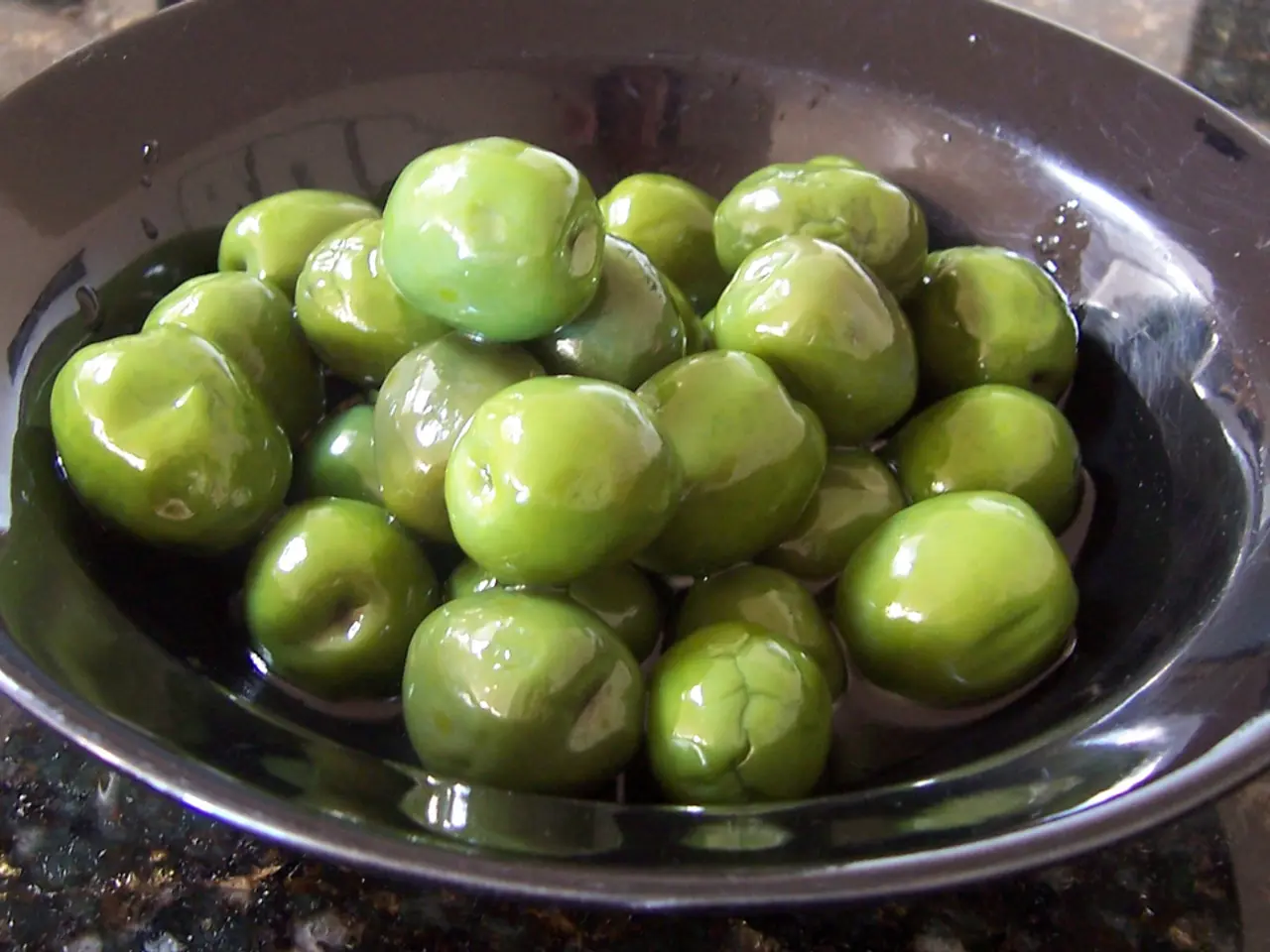
Struggling exports of black olives from Spain due to fresh US tariffs
The ongoing tariffs on Spanish black olives, initially introduced during the Trump administration, have taken a heavy toll on the country's exports. The European Union's recent imposition of a 15% tariff on imported goods, including black olives, under the EU-U.S. trade deal, has further complicated matters for Spanish producers [1][2][3].
The new tariff, while lower than the previous 30% or even 50% for black olives, remains a significant burden, making Spanish black olives less competitive in the U.S. market. As a result, Spain's market share in the U.S. has plummeted from 49% in 2017 to just 19% in 2024 [1].
Eduardo Martin, secretary of Asaja, a Spanish local farmers' association, expressed concern, stating that an additional 15% tariff would be "unviable" for black table olives [1]. Spanish producers are now seeking ways to adapt, with many turning to increased sales of green olives and diversifying their export markets [1][2].
Innovation has played a key role in this adaptation. Companies like Agro Sevilla have expanded green olive exports and managed to reduce black olive tariffs to 10% from 31% [2]. Spanish exporters have also ventured into Asian markets, taking advantage of lower tariffs on green olives [2].
The tariffs, however, have not been without consequences. Among the 25 Spanish exporters active before the tariffs, only four major players remain, according to Asemesa, Spain's Association of Table Olive Exporters [1]. To cope, Spanish agricultural organisations and cooperatives have called for government support to mitigate export losses [4].
The EU has responded with aid packages totaling billions of euros to help Spain’s olive sector withstand the tariff-related losses [3]. Spanish farmers have also taken steps to increase green olive sales and diversify their markets in response to the tariffs [1].
Despite the challenges, Spanish exporters have found some success in the U.S. market. Innovative product offerings, such as black olives stuffed with salmon or cheese, have helped boost sales in Europe and Asia [2].
The U.S. measures, intended to bolster domestic growers, have not had the desired effect. When California has low production, they import raw olives to finish processing them in the U.S., mostly from Spain [1]. Imports of table olives surged by 40% in the first eight months of 2024 compared to the same period in 2017, with Egypt, Portugal, and Turkey increasing exports the most [1].
Notably, Aceitunas Guadalquivir, a major Spanish olive exporter, acquired Bell-Carter Foods, one of the two leading U.S. companies that had advocated for the tariffs [1]. The company did not reply to a Reuters request for comment about such exports [1].
As the situation evolves, it is clear that the tariffs have had a significant impact on Spanish black olive exports to the U.S. The new EU-U.S. tariff continues to pose challenges, but Spanish exporters are adapting, innovating, and seeking support to weather these difficult times.
[1] Reuters, "Spanish black olive exporters struggle with U.S. tariffs," 2024. [2] The Guardian, "Spain's black olive exporters hit by US tariffs," 2024. [3] BBC News, "EU aid package for Spanish olive sector," 2024. [4] El Pais, "Spanish olive sector calls for EU support amid tariff losses," 2024.
- The increased tariffs on imported goods, particularly black olives, have caused financial strain within the Spanish industry, making it difficult for Spanish black olive exporters to remain competitive in the US market.
- As a result of the imposed tariffs, Spanish producers are turning to innovation, such as expanded sales of green olives and diversification of their export markets, to adapt and sustain their finance within the olive industry.




