
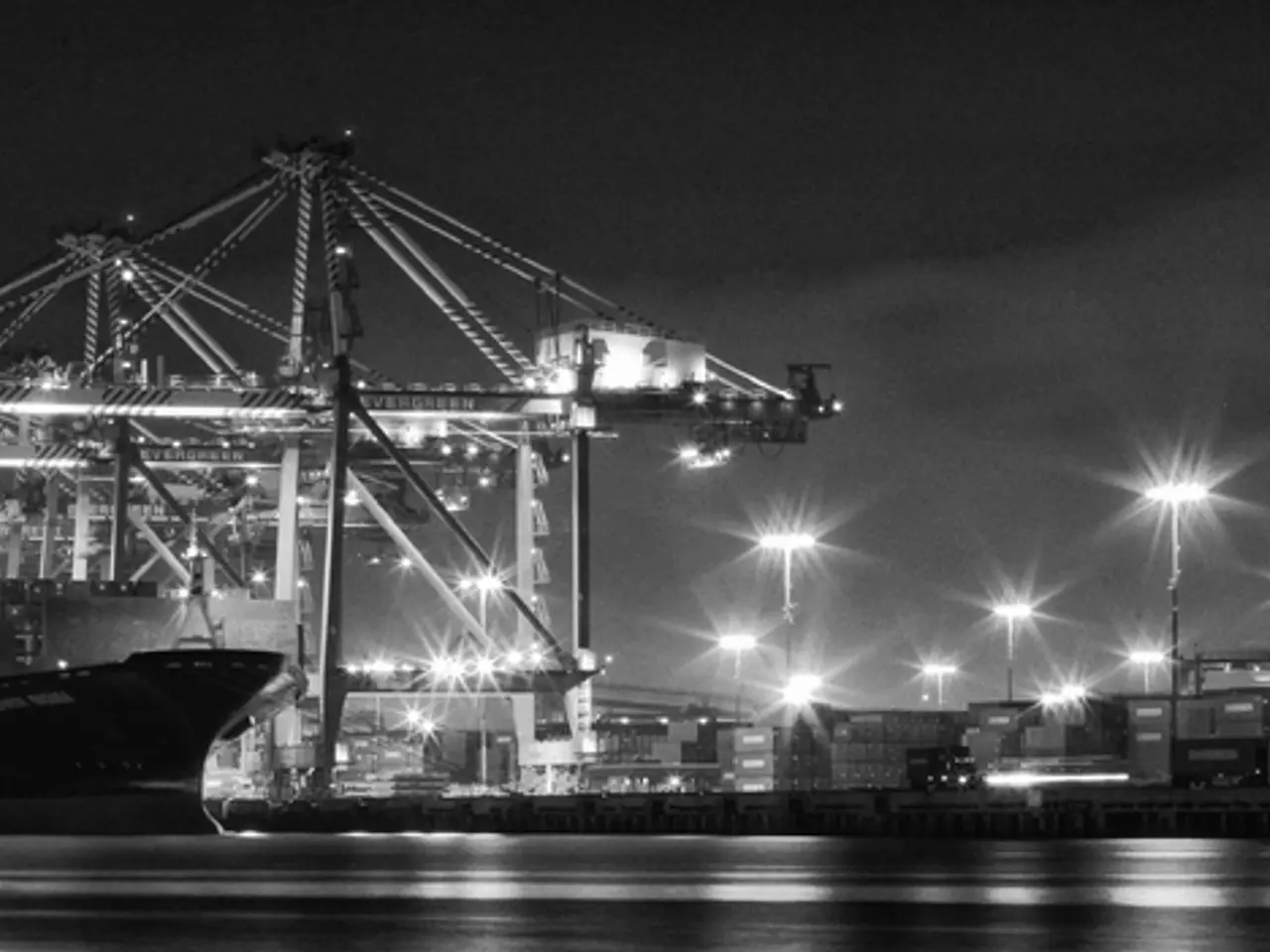
Splitting the power outlet into two separate locations?
In the heart of Bremen, Germany, a contentious debate is unfolding over the future of the Bremerhaven Energy-Port, a project aimed at handling renewable energies, specifically offshore wind power and hydrogen. The controversy primarily revolves around differing visions regarding the project's development and the transition of energy infrastructure, reflecting broader shifts in energy policy and economic priorities.
Thorsten Raschen, the maritime spokesman of the Bremen CDU, has been vocal in his criticism of the Red-Green-Red coalition, accusing them of planlessness and financial chaos in relation to the Energy-Port project. Raschen also alleges that the coalition has broken its promise regarding the project.
However, State Councilor Kai Stührenberg has confirmed that the Senate is working on a Senate draft for the Energy-Port. The project, originally decided upon with unanimity by the Citizens' Assembly, is intended to serve as a transshipment point for renewable energies, with a focus on offshore wind power and hydrogen.
The Lunedelta has been identified as the intended location for the transshipment point of the Energy-Port. Meanwhile, the Bremen coalition is considering separate locations for the Energy-Port, with production, assembly, and recycling of offshore and hydrogen plants to be located in the Fischereihafen, and supply ships to dock at the Stromkaje.
The Greens' city councilor Ralf Heinrich voices a potential disadvantage to the location of the Energy-Port in Bremerhaven. Despite these concerns, the Bremen Senate appears to actively promote renewable energy sectors and offshore wind power, fostering energy-related innovation and cooperation with international partners.
The Bremen Senate aims to provide updates on the further course of the Energy-Port by early July. However, specific details of the controversy are not explicitly provided in the available search results specifying their exact position on the Bremerhaven Energy-Port. The emphasis is on fostering renewable energy and related port capabilities, aligning with broader European trends.
As the debate continues, it is clear that the Bremerhaven Energy-Port project is a significant step towards a more sustainable energy future for Bremen and beyond. The CDU's concerns about the project's potential failure underscore the importance of careful planning and strategic decision-making to ensure the project's success and the city's continued commitment to renewable energy.
In light of the ongoing debate, the Bremen Senate is working on a Senate draft for the Bremerhaven Energy-Port, aiming to foster renewable energy sectors, specifically offshore wind power and hydrogen, by establishing a transshipment point in the Lunedelta. The strategic development of the Energy-Port's industry, including production, assembly, and recycling of offshore and hydrogen plants, is subject to the Bremen coalition's consideration, with potential locations for these facilities in the Fischereihafen and Stromkaje. The energy sector, along with its financing, is a critical aspect of both economic and social policy, underlining the importance of thoughtful economic priorities in the project's execution.




