
Shallow Elbe Halts Ferry Service - Stranded Commuters and Locals Resort to Rowing - Shallow Elbe Disrupts Ferry Service - Local Paddlers Find Alternatives for Daily Travel
In the heart of Germany, the Elbe River is currently experiencing critically low water levels, causing significant challenges for navigation, transport, and local communities. The situation, particularly highlighted in early July 2025, has led to a debate about the most suitable infrastructure solution to ensure reliable transport links in the future.
Persistent drought and lack of rainfall since at least April 2025 have caused water shortages in the Elbe River basin. In Dresden, local authorities have already imposed a ban on water withdrawal from rivers and streams from July 1 to October 31, 2025, to mitigate the effects of the drought and protect the river ecosystem. Water levels reported at multiple gauging stations show significantly reduced river heights and flows, impacting navigation and water-dependent activities.
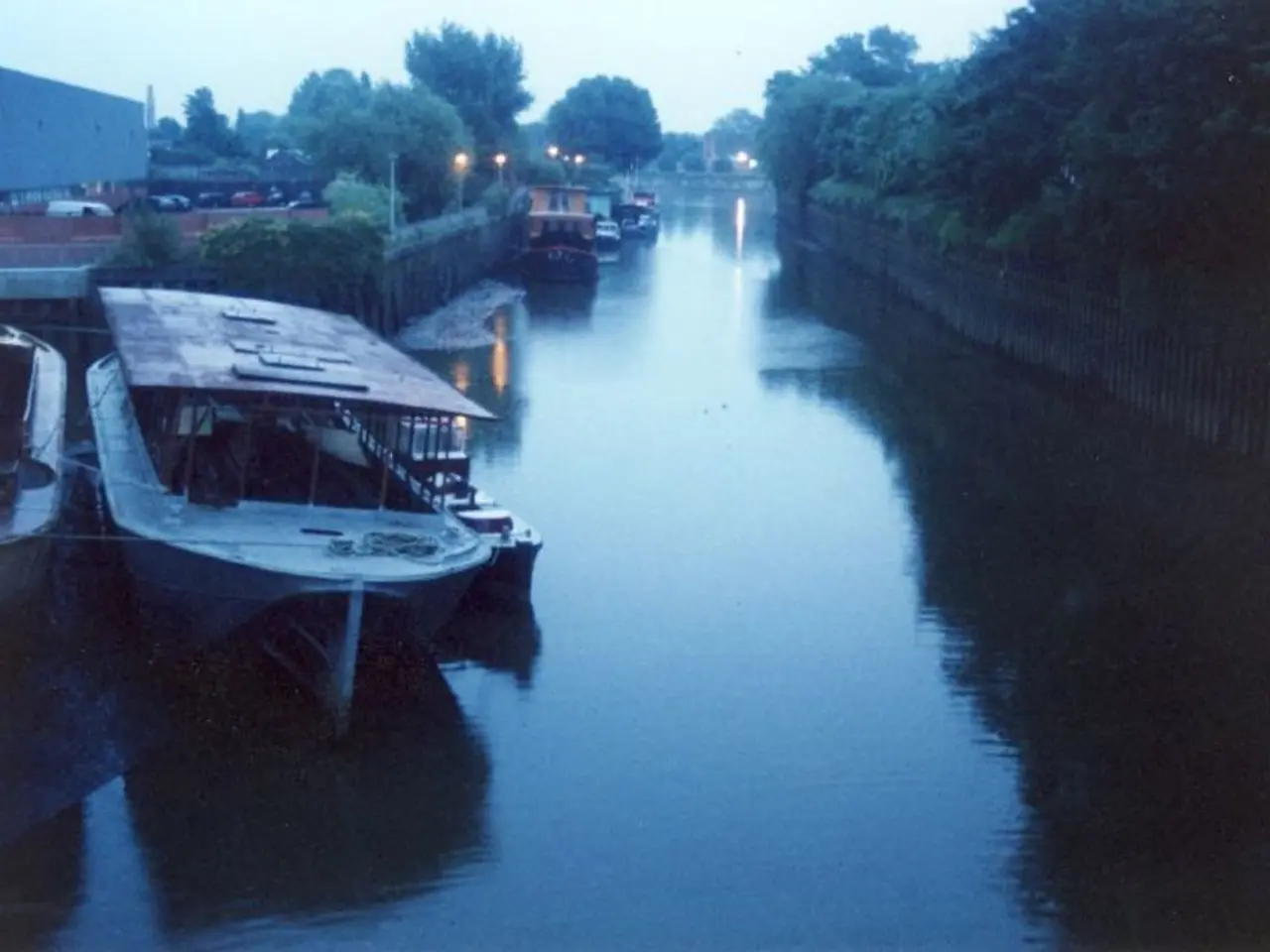
Navigation and transport are among the sectors most affected by the low water levels. The 'Tanja', a ferry that usually transports 500 vehicles daily and has 300 annual pass holders, has been out of service since mid-May due to sand damage to its propulsion systems. Its operator is seeking a new low-water ferry with a reduced draft, and the cost of a successor model is estimated to be up to eight million euros. The state government is considering a new ferry concept as an alternative to the proposed bridge.
The Industry and Commerce Chamber (IHKLW) Lüneburg-Wolfsburg and the Chamber of Crafts Braunschweig-Lüneburg-Stade, along with the district of Lüchow-Dannenberg, are advocating for a bridge over the Elbe River. The district of Lüneburg, as the largest infrastructure project, also supports this proposal. The crossing is planned to connect Neu Darchau in the district of Lüchow-Dannenberg with Darchau in the municipality of Amt Neuhaus in the district of Lüneburg.
However, the state government has spoken out against a bridge due to escalating costs. Instead, they are considering a better ferry concept. A canoe rental in Neu Darchau is offering free rides across the Elbe to commuters, residents, and tourists, which Anne Rogge, a passenger, stated saves her an hour of work time. Passengers on the canoe rental help paddle, which is beneficial during windy conditions.
Given the low water levels and increasing extremes, infrastructure solutions like new ferries or bridges must take into account changes in water depth and flow variability. A new ferry would need a design adaptable to fluctuating water levels, possibly with shallow drafts or adjustable ramps to ensure operability during low flows. A new bridge proposal must ensure sufficient clearance above the lowest expected river level, factoring in the increased frequency of droughts and low water scenarios due to climate change.
More broadly, adaptive infrastructure combined with river management strategies to regulate flow and water use could help mitigate impacts and sustain transport links. Environmental assessments and long-term hydrological studies should guide the placement and design of any new crossings to ensure resilience to extreme water level fluctuations.
The Elbe currently has a level of 70 centimeters at the specified point and may drop further in the next few days. The estimated cost for the crossing is more than 90 million euros. As the Elbe River continues to face critically low water levels, the debate about the most suitable infrastructure solution to ensure reliable transport links in the future remains a pressing issue.
- In light of the ongoing crisis with critically low water levels in the Elbe River, the local employment policy must consider viable solutions for the transportation industry, such as providing funding for the development of low-draft ferries or adaptable new ferry designs that can effectively operate during low flows.
- As the economy relies heavily on the transportation sector, the employment policy must collaborate with the finance industry to secure funding for adaptive infrastructure projects, ensuring long-term reliability and sustainability of transport links in the face of climate change-induced water level fluctuations.




