
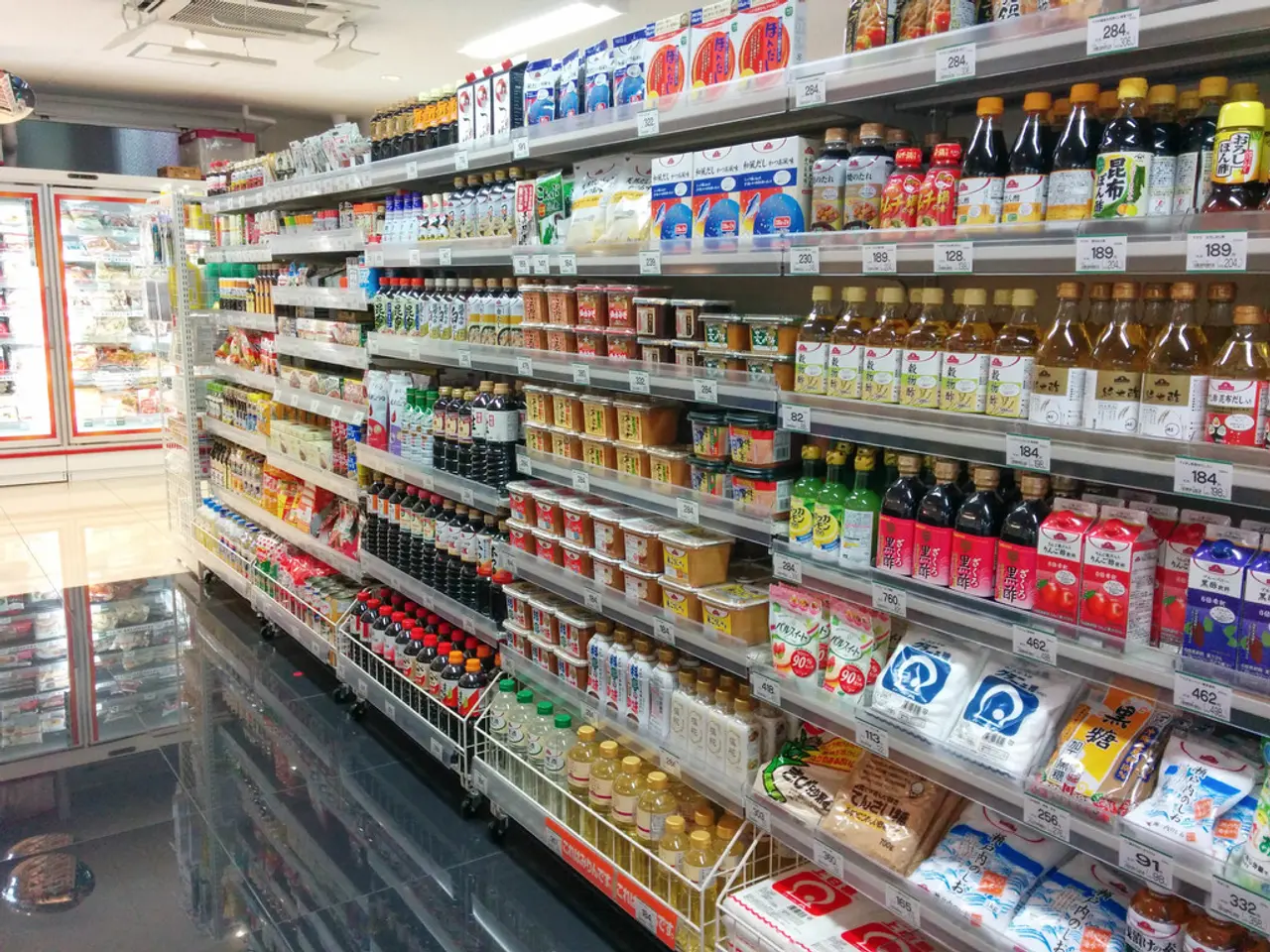
Rising energy and food expenses lead to price increases in the Saarland region.
In the heart of Germany, the Saarland region has been grappling with rising inflation rates, particularly in the sectors of energy and food, as revealed in July 2023 data.
District heating prices in Saarland saw a significant drop of 18.8% compared to the previous year, but this decrease was overshadowed by a 19.1% increase in the cost of solid fuels such as firewood and wood pellets. The high inflation in Saarland was primarily driven by factors affecting the broader German economy and energy markets during this period.
Energy price increases, fueled by volatility in oil and heating oil prices, were a major contributor to the inflation pressures. The energy sector experienced geopolitical tensions, supply constraints, and inventories adjustments, leading to spikes in energy prices that impacted Germany, including Saarland, from 2023 through to 2025 [3].
Food prices also rose due to supply chain disruptions and increased production costs. The war in Ukraine and global disruptions from COVID-19 affected fertilizer availability and agricultural input costs, translating locally to higher consumer prices, especially for essentials [1].
Germany's broader inflation trends, with elevated rates above the usual target of around 2%, were also felt in Saarland. The region, as an industrial and populous area, experienced these effects markedly in the energy and food sectors [1][4].
Household energy prices in Saarland increased by 14.6% in the past year, but heating oil prices remained only 0.1% more expensive compared to June 2023, despite a 36.6% fall compared to the previous year. Fuel prices for motorists in Saarland decreased by 5.5% compared to July 2022 [2].
Food prices in Saarland saw a year-on-year increase of almost 9.5% in July 2023. Prices for oils and fats, grain products, dairy products, fruits, and vegetables showed the strongest increases. Without considering heating oil and fuels, the inflation rate in Saarland would have been 6.6% in July 2023 [2].
The consumer price index in Saarland in July 2023 was 115.8. Prices for clothing and footwear were 3.0% higher compared to the previous year. The cost of food and drinks in restaurants, cafes, and bars increased by 7.9% [2].
The inflation rate in Saarland was 5.9% in July 2023, a decrease from 6.0% in June. However, the development of the inflation rate in the coming months remains uncertain [2]. The inflated costs of energy and food are putting a significant strain on the people of Saarland.
Compared to the base year 2020, food prices in Saarland have increased by 27.8% over three years [2]. The rising costs are a concern for the region's residents, who are struggling to cope with the increased expenses.
References: [1] Bundesbank (2023). Inflation in Germany: Causes and Consequences. Retrieved from https://www.bundesbank.de/Redaktion/DE/Pressemitteilungen/2023/2023-07-12_Inflation-in-Deutschland-Ursachen-und-Konsequenzen.html
[2] Statistisches Landesamt des Saarlandes (2023). Consumer Price Index - July 2023. Retrieved from https://www.statistik-saar.de/DE/Presse/Pressemeldungen/2023/2023-08-11_Konsumentenpreisindex-Juli-2023.html
[3] European Commission (2023). Energy Market Monitor - Q2 2023. Retrieved from https://ec.europa.eu/energy/en/topics/energy-markets-and-trade/energy-market-monitor-q2-2023_en
[4] Bundesregierung (2023). Inflation in Germany: Current Situation and Measures. Retrieved from https://www.bundesregierung.de/breg-de/themen/wirtschaft/inflation-in-deutschland-lage-und-massnahmen-1107074
- In the face of the rising inflation rates in energy and food sectors, the Saarland region's residents are struggling to cope with increased expenses, even as district heating prices showed a minor decrease.
- The high finance costs associated with increased energy prices, due to volatility in oil and heating oil markets, are impacting the industry sector in the Saarland region, contributing to the broader German inflation trends.
- The high inflation in Saarland has extended to the lifestyle sector, with food prices showing a year-on-year increase of almost 9.5% in July 2023, particularly for food-and-drink essentials like oils, grains, dairy products, and fruits.




