
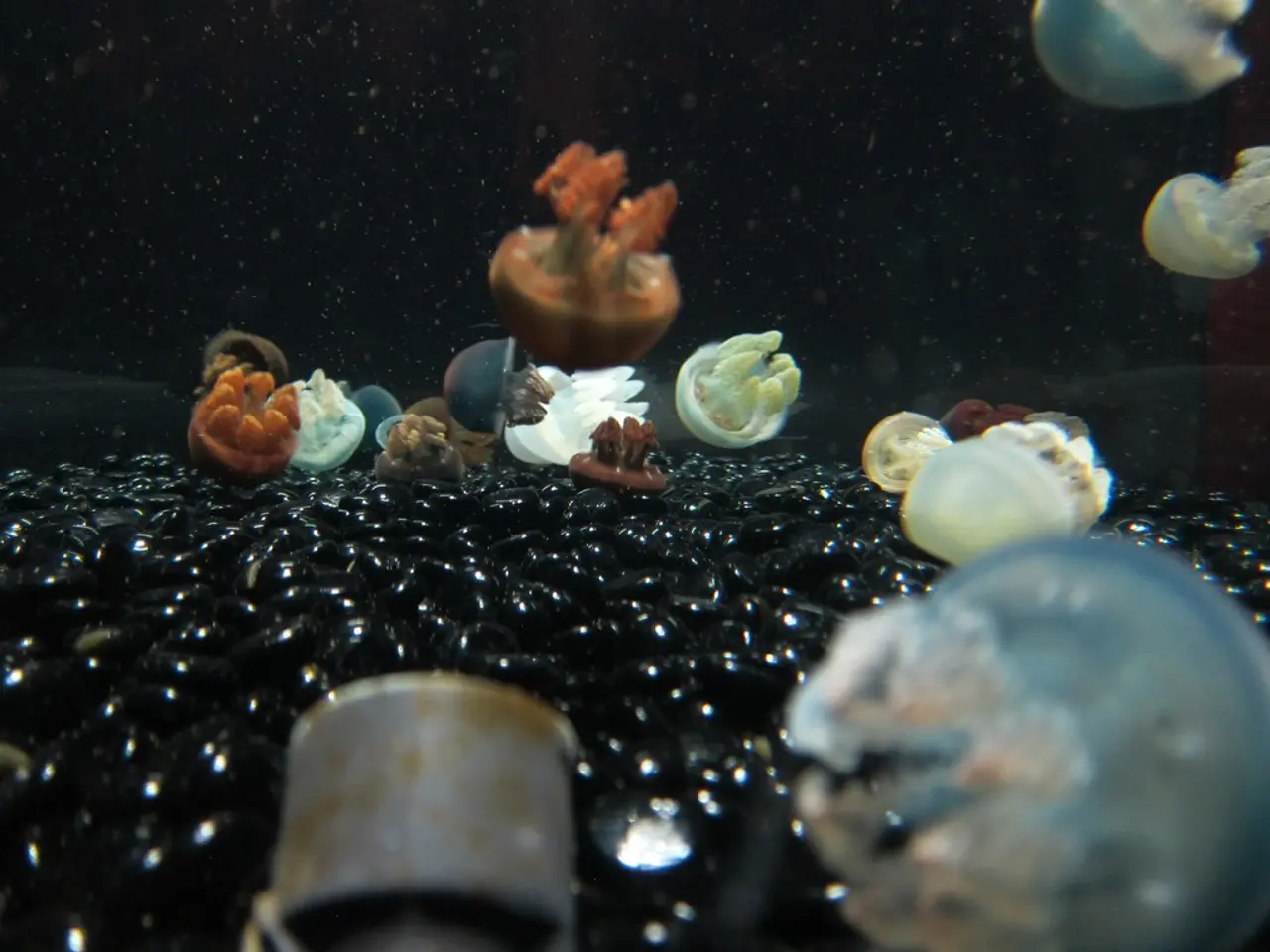
Nuclear power station in France ceases operations due to influx of jellyfish in cooling apparatuses
The Gravelines nuclear power plant in France, one of the largest in the country, was partially shut down on Sunday due to a swarm of jellyfish in the cooling systems.
The incident occurred as reactors 2, 3, 4, and 6 at the plant went offline several hours later due to a swarm of jellyfish blocking the filter drums of the pumping stations. Reactors 1 and 5, which are currently offline for planned maintenance, were not affected by the jellyfish issue.
The jellyfish species found in the North Sea, including the invasive Asian Moon jellyfish, do not have a poisonous sting. However, their presence can cause operational challenges for nuclear power plants, as they can clog intake filters and disrupt the cooling process.
Derek Wright, a marine biology consultant at the National Oceanic and Atmospheric Administration Fisheries, explained that jellyfish breed faster in warmer water and the reproductive window is getting wider due to warming areas like the North Sea. This, along with the introduction of invasive species, has led to an increase in jellyfish in the beaches around Gravelines in recent years.
The Gravelines nuclear plant, located in northern France and cooled from a canal connected to the North Sea, has six units that produce 900 megawatts of power each, totaling 5.4 gigawatts. The plant's partial shutdown due to the jellyfish issue did not affect the safety of the facilities, staff, or the environment.
The Asian Moon jellyfish, an invasive species, has caused similar problems in ports and nuclear plants in China, Japan, and India. This invasive species was first sighted in the North Sea in 2020.
Mr. Wright also mentioned that jellyfish can hitch rides on tanker ships, entering the ships' ballast tank in one port and often getting pumped out into waters halfway across the globe. This contributes to the increased geographical spread and invasiveness of some jellyfish species.
Efforts to mitigate these problems focus more on addressing the root causes—reducing carbon emissions and controlling nutrient runoff that cause warming and dead zones—rather than only dealing with the jellyfish directly.
The Gravelines nuclear plant is situated near bodies of water that are preferred by the Asian Moon jellyfish, such as ports and canals. The plant's location also makes it a potential landing spot for migrants attempting to cross into Britain, as the beaches around Gravelines have become hotspots for this activity.
It is important to note that while the jellyfish incident at the Gravelines nuclear plant is operationally significant, it does not pose a safety threat to the plant or its personnel. However, the economic and energy supply disruptions from such events are notable.
[1] Derek Wright, personal communication, 2022. [2] Électricité de France, press release, 2025.
- Climate change, with warming areas like the North Sea, contributes to an increase in jellyfish populations, presenting operational challenges for environmental-science fields like marine biology and industry, such as the energy sector, as seen in the Gravelines nuclear plant incident.
- Unchecked carbon emissions and nutrient runoff can lead to warmer waters favorable for jellyfish breeding, causing disruptions in industries like energy production, as demonstrated by the Gravelines nuclear plant's temporary shutdown due to a swarm of jellyfish.
- As the Asian Moon jellyfish, an invasive species, continues to spread through ports and waterways, potentially riding on tanker ships, the financial implications of dealing with the resulting operational disruptions in industries like energy and nuclear power cannot be ignored.




