
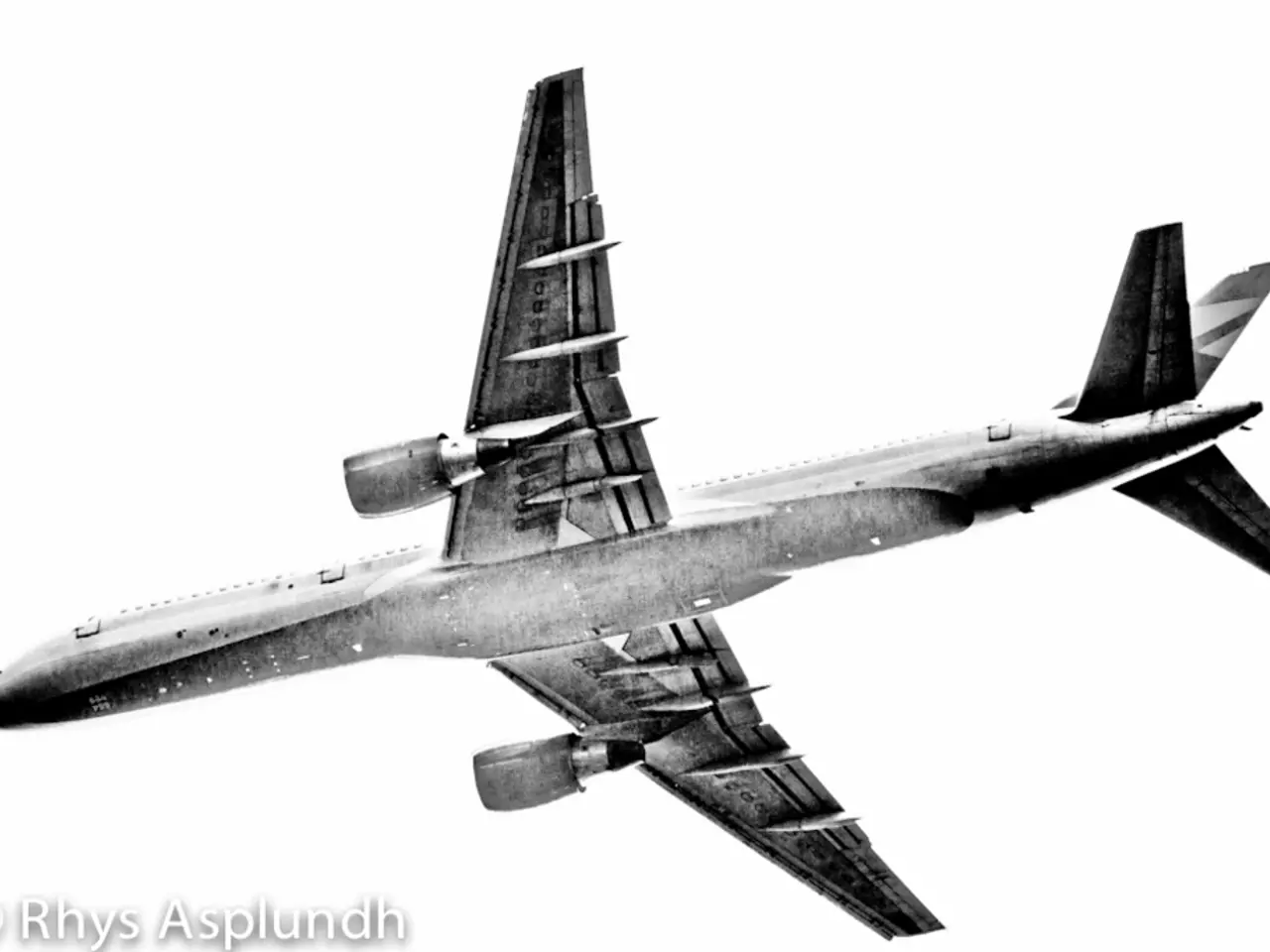
Jet Crew Neglects Speed Limit During Visual Flight Departure
In the bustling New York metro area, home to one of the busiest and most congested airspaces in the world, strict speed restrictions are in place to ensure the safe and orderly flow of aircraft. Among these regulations, the toughest airborne speed restriction for VFR departures and arrivals is the 250-knot limit below 10,000 feet MSL in Class B and surrounding controlled airspace.
For instance, Teterboro Airport (KTEB), a busy general aviation airport serving the greater New York area with hundreds of daily departures and arrivals, primarily comprises corporate jets ranging from Cessna Mustangs to Gulfstream G650s. The Dalton VFR departure from Teterboro requires maintaining a maximum speed of 180 knots. However, once in Class B airspace, the standard maximum speed below 10,000 feet MSL is 250 knots.
It's essential to note that ATC may instruct speeds above 200 knots but typically not exceeding 250 knots below Class B airspace. This minimum speed is often required for sequencing and separation, particularly by the New York TRACON (N90). However, any speed instructions above 250 knots below 10,000 feet must be explicitly authorized by ATC, and such instructions are uncommon, potentially causing operational challenges.
A recent incident involving a crew of a large corporate jet, while following the Dalton VFR departure, inadvertently increased their speed to about 220 KIAS. This underscores the importance of reviewing speed restrictions carefully during takeoff briefings to avoid violations. Even for aircraft not in contact with ATC, the speed restriction applies.
The speed restriction of 200 knots helps separate aircraft operating within Class B from those outside of Class B. Furthermore, it provides ATC an added buffer to get traffic out of the way, should an airspace deviation occur. In Class C/D airspace, no person may operate an aircraft at an indicated airspeed of more than 200 knots (230 mph) at or below 2,500 feet above the surface, within 4 nautical miles of the primary Class C or Class D airport.
In summary, adhering to speed restrictions is crucial in New York's airspace to maintain safety and orderliness. Extra time spent during the takeoff briefing reviewing speed restrictions could save you from a violation. Always ensure to maintain the required speeds, particularly the 250-knot limit below 10,000 feet MSL in Class B and surrounding controlled airspace, to ensure a smooth and incident-free flight.
- In the aviation industry, particularly within the New York metro area, strict regulations govern air traffic, including speed restrictions on takeoff and approach.
- Among these regulations, a 250-knot limit is imposed below 10,000 feet MSL in Class B and surrounding controlled airspace for VFR (Visual Flight Rules) departures and arrivals.
- Teterboro Airport (KTEB), a hub for corporate aviation in the greater New York area, requires adherence to such speed limits for departures like the Dalton VFR, maintaining a maximum speed of 180 knots.
- However, once within Class B airspace, the standard maximum speed is 250 knots, and ATC may instruct speeds above 200 knots but not exceeding 250 knots.
- Speed instructions above 250 knots below 10,000 feet must be authorized by ATC and are uncommon, as they may cause operational challenges.
- A recent incident involving a corporate jet crew underscores the importance of reviewing speed restrictions during takeoff briefings to avoid violations, even for aircraft not in contact with ATC.
- Speed restrictions help separate aircraft within Class B from those outside Class B, providing ATC with an added buffer to manage traffic in case of airspace deviations.
- In Class C/D airspace, the speed limit is 200 knots at or below 2,500 feet above the surface, within 4 nautical miles of the primary airport.
- Pilots undergoing training must understand and follow these procedures to ensure a safe and orderly flow of aircraft and avoid potential incidents.
- Compliance with these regulations is vital to the finance and transportation sectors, as aviation plays a significant role in the region's economy.
- Adhering to speed restrictions is essential for maintaining safety and orderliness in New York's congested airspace, making the extra time spent during takeoff briefings reviewing these restrictions well worth it.




