
India's biofuel initiative encroaches on the profits of poultry farmers
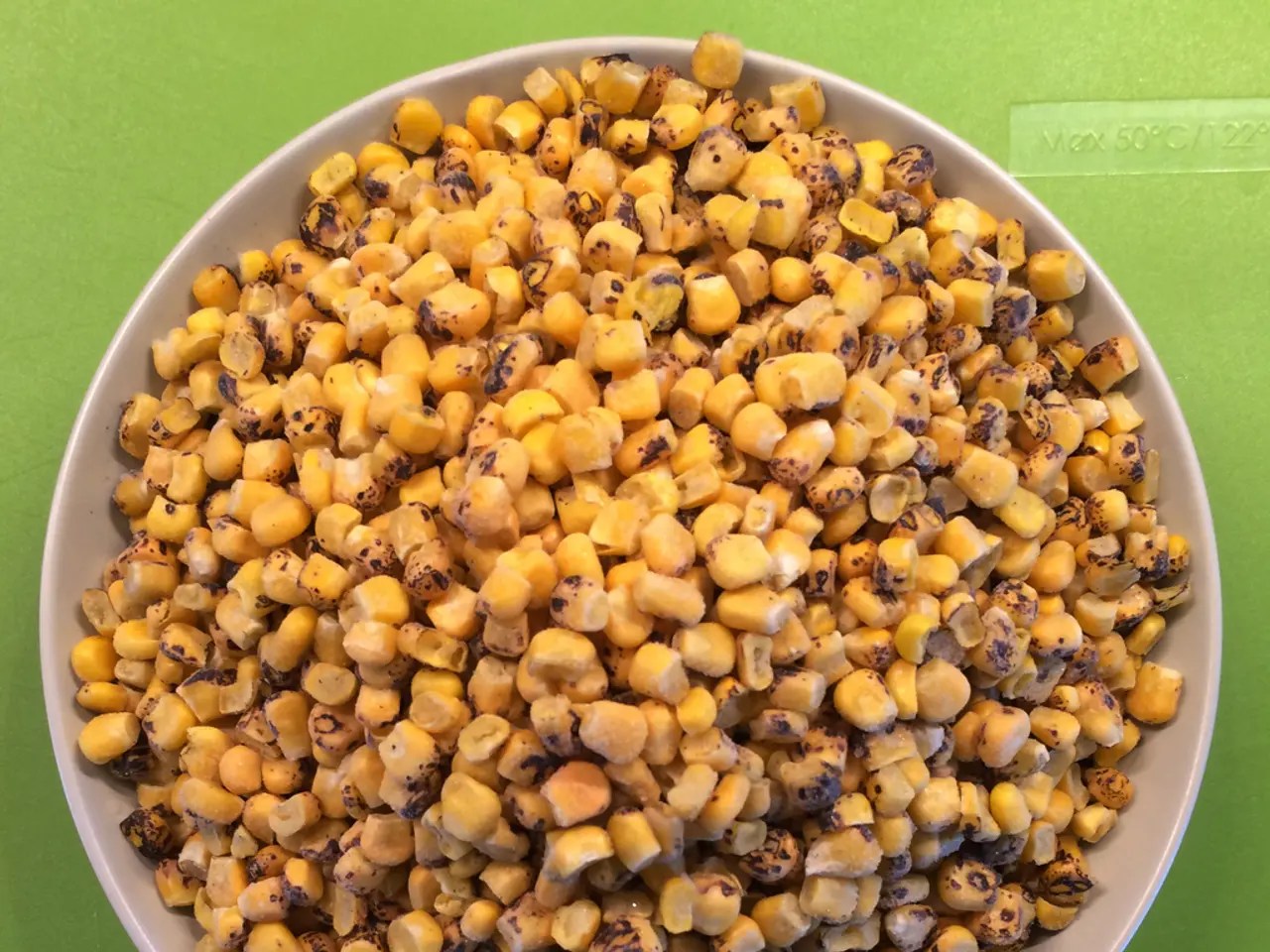
In India, the government's focus on biofuels has boosted the demand and prices for maize, a key ethanol feedstock. This rise in maize prices has created a significant challenge for small poultry farmers who rely heavily on maize as a primary feed ingredient.
The ethanol blending program has encouraged farmers to expand maize cultivation significantly, particularly in states like Bihar, Uttar Pradesh, and Madhya Pradesh. The increased demand driven by biofuel production has led to maize prices doubling or tripling, reaching around Rs 2,600-2,800 per quintal[1][3].
While this rise in maize prices benefits maize farmers, it simultaneously increases feed costs for poultry farmers. This has resulted in squeezed profit margins for small-scale poultry producers struggling to maintain egg production economically[5].
Poultry farmers face a dilemma as feed is their largest cost component. The biofuel-driven rise in maize prices raises poultry feed costs notably, indirectly affecting the affordability and profitability of poultry farming in India[5].
The rapid expansion of maize and sugarcane areas due to biofuel incentives has raised concerns about competition for land and resources with other important crops like soybean, which impacts protein availability and crop diversity[3].
The Indian government aims to have every litre of petrol sold in the country contain 20% ethanol fuel by the end of 2025[6]. However, this push for ethanol blending is largely based on first-generation biofuels made from food crops like maize, sugarcane, and surplus rice, putting food crop prices under pressure[4].
If 2G ethanol becomes commercially viable, it could help India meet its blending targets without compromising food security or land-use change. Second-generation, or 2G, ethanol uses crop residues and non-food biomass, which could reduce the strain on food systems[7].
However, the current demand for maize exceeds production, including for fuel, liquor, and industrial uses[8]. As a result, India is now importing maize to stabilize its domestic supply[9]. The town of Ghazipur, located along the Ganges river in north India, is experiencing a decrease in egg production due to a 40% increase in the price of feed for free-range hens[10].
Experts suggest new biofuel technologies as a potential solution[11]. However, getting loans is difficult for small farmers, and they have limited ability to cushion rising costs. As a result, they may be squeezed out entirely by increasing costs[12].
In conclusion, India's biofuel program is a double-edged sword. While it supports farmers of maize by increasing prices and incomes, it simultaneously raises feed costs for small poultry farmers, reducing their profitability due to higher maize prices driven by biofuel production demand[1][3][5].
- The Indian government's push for biofuel production, particularly ethanol, is based on first-generation biofuels made from food crops, which could potentially lead to increased prices of food crops and impact the profitability of industries that rely on them, such as finance (poultry farming) and energy (production of eggs).
- To meet the goal of having every litre of petrol sold in the country contain 20% ethanol fuel by 2025, India is significantly expanding the cultivation of crops like maize, raising concerns about competition for land and resources, specifically with other important crops like soybean, which could impact the availability of protein and crop diversity.
- The rapid expansion of maize cultivation due to biofuel incentives is causing a surge in maize prices, which could impact the carbon footprint of the industry, as higher prices of maize as a feed ingredient will indirectly increase the costs of producing eggs, contributing to climate change through increased greenhouse gas emissions from the increase in feed production and transportation.




