
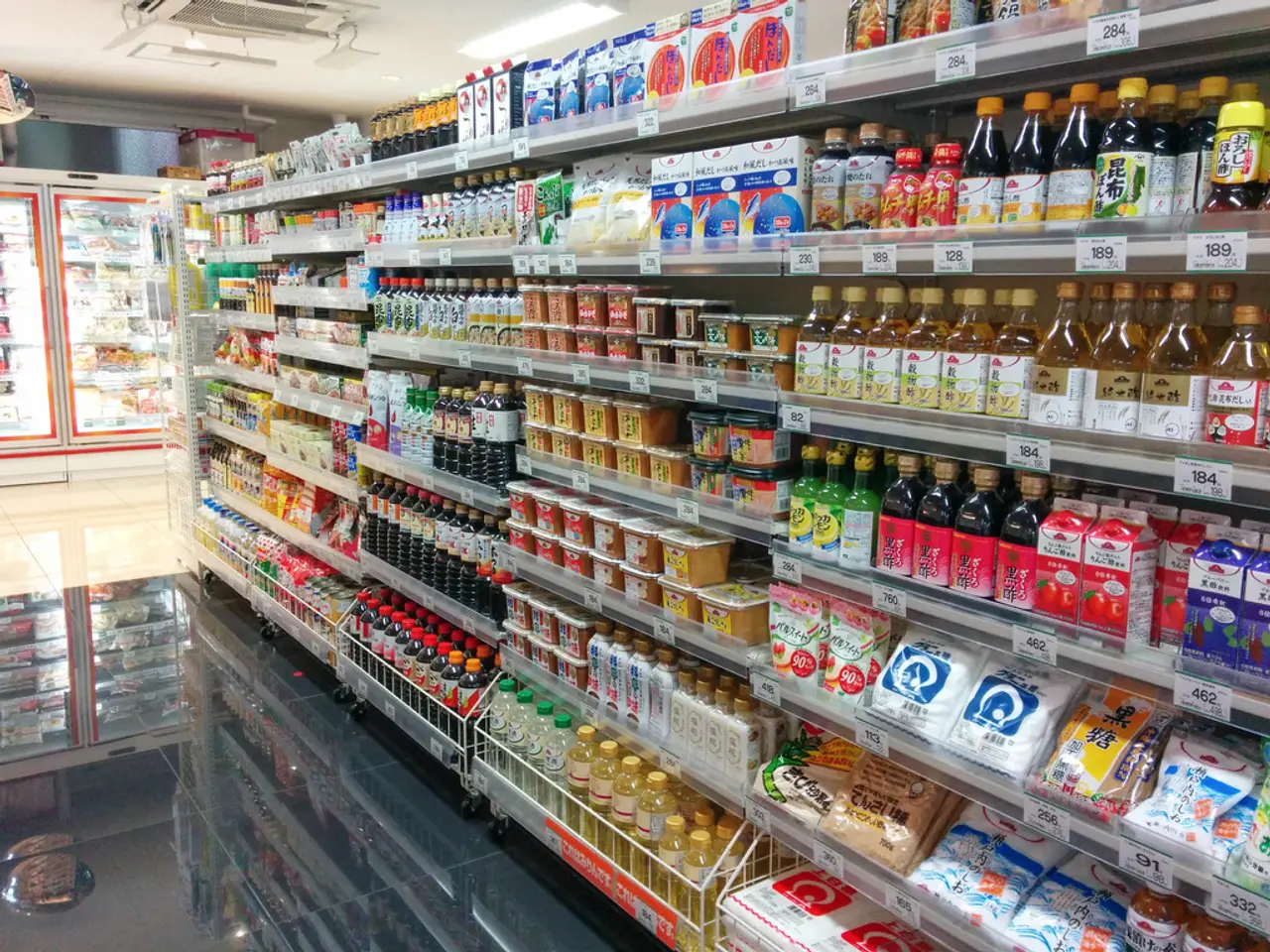
Indian retail inflation experienced a decrease, reaching 2.1% in June 2023, marking the lowest level since 2019.
In a significant development, India's retail inflation based on the Consumer Price Index (CPI) dropped to 2.1% in June 2025, marking its lowest point in over six years. This decline, the sharpest since January 2019, has brought relief to households and businesses alike.
The reduction in overall inflation was primarily driven by a combination of factors. Easing of food prices played a major role, with a sharp decline in prices of key food categories such as vegetables, pulses, spices, meat, fish, and cereals. The prices of pulses, for instance, fell by 11.76%, while spices recorded a decline of 3.03%. Moreover, vegetables nosedived by 19% year-on-year, with tomatoes and onions witnessing dramatic corrections of -31.5% and -26.6% respectively.
Favourable base effects also contributed to the lower year-on-year inflation rate in June 2025. The comparison with higher inflation levels from the previous year, particularly June 2024 when inflation was 5.08%, created a base effect.
The continued moderation in inflation, with broad-based moderation seen across the economy, marked the fifth consecutive month inflation stayed below the Reserve Bank of India’s (RBI) medium-term target of 4%. This was further reinforced by negative wholesale inflation, as India's wholesale price inflation turned negative (-0.13%) in June 2025, partly due to price reductions in food articles, mineral oils, basic metals, crude petroleum, and natural gas.
In response to the softening inflation, the RBI's Monetary Policy Committee recently cut the benchmark repo rate by 50 basis points, bringing it down from 6% to 5.5%. This move will inject ₹2.5 lakh crore into the banking system, enhancing liquidity and boosting credit flows. The RBI also reduced the Cash Reserve Ratio (CRR) by 100 basis points, from 4% to 3%.
However, some sectors such as education, healthcare, and transport and communication remain inflation sticky zones. Prices of gold surged by 36%, and silver rose by 17.8%, bucking the overall trend. Coconut oil, driven by global market conditions, soared by 97.2%.
Despite these anomalies, the RBI is confident of a durable alignment of headline inflation with the 4% target and expects it to undershoot this target during the year. Economists project headline CPI inflation to remain under 3.5% until December 2025.
RBI Governor Sanjay Malhotra stated that inflation has significantly softened over the last six months. He expressed optimism that assuming a normal monsoon, CPI inflation is expected to remain well within the RBI's target band, boding well for economic stability. The RBI has revised its inflation outlook for FY 2025-26 downward, from 4% to 3.7%.
The decline in petrol and diesel prices by 6.57% and 5.12% respectively also contributed to the overall reduction in inflation. Electricity rates also declined 9.1% month-on-month.
In summary, the combination of falling food prices, beneficial base effects, and easing wholesale inflation were the key contributors to the sharp decline in India's retail inflation in June 2025. This development is expected to boost consumer confidence and support economic growth in the coming months.
The reduction in retail inflation was partly credited to the RBI's decision, following the softening inflation, to cut the benchmark repo rate, injecting more liquidity into the banking system and fostering credit flows in the business sector. The decline in retail inflation also positively impacted the finance sector, as it brought relief to households, potentially increasing their spending power.




