
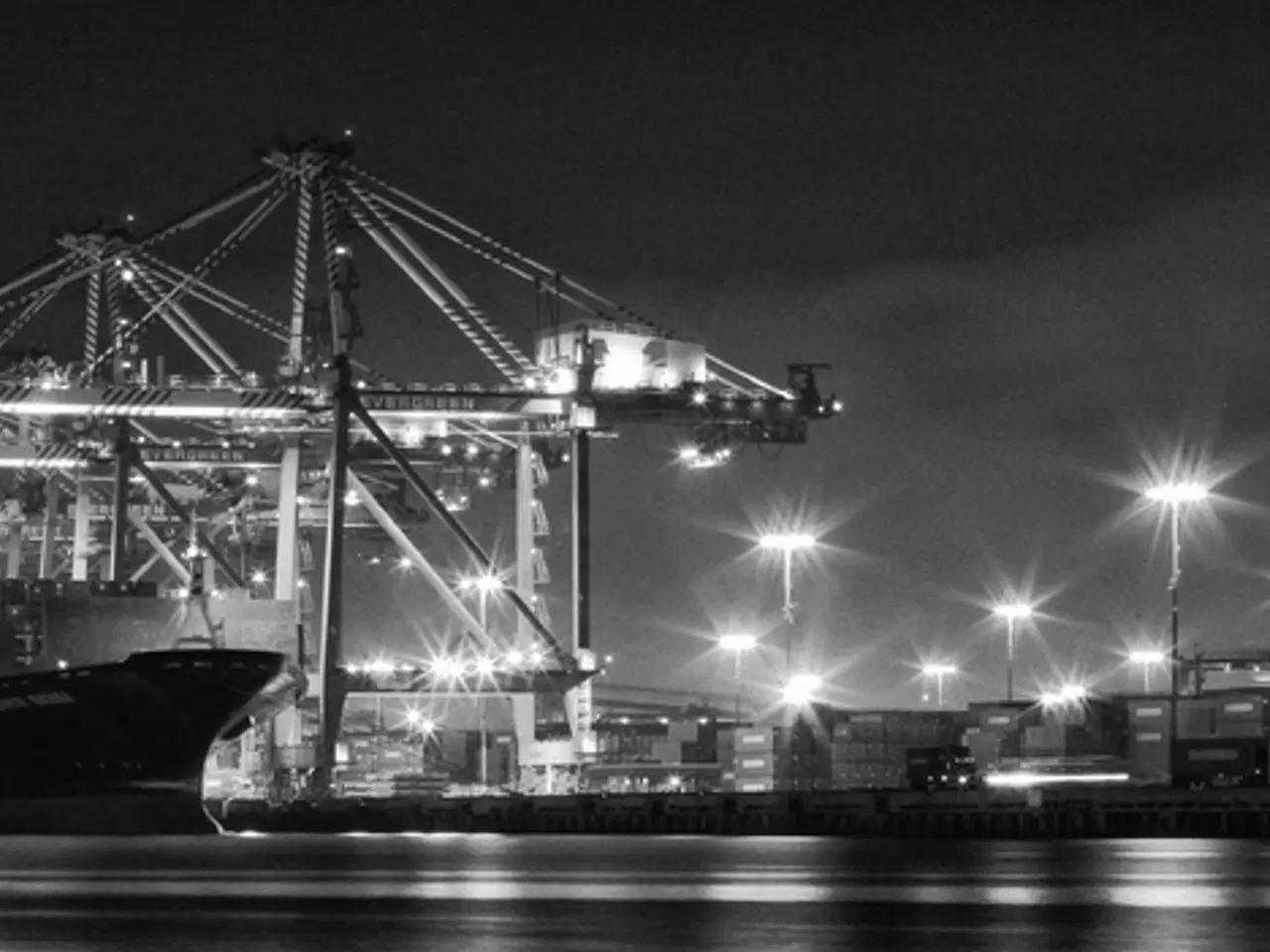
Dock workers may be seeking a 8.4 percent increase in their wages, according to demands made by Verdi. - Increase in Salary Demanded by Verdi for Port Workers: A Demand for Approximately 8.4% Pay Hike
In the bustling ports of Hamburg, Bremerhaven, and Wilhelmshaven, the ongoing wage negotiations between Verdi, the United Services Trade Union, and the Central Association of German Seaport Operators (ZDS) are shaping the future of thousands of dockworkers. As of early July 2025, these crucial talks continue, albeit with challenges.
## Current Status of Negotiations
The negotiations, now in progress for several rounds, revolve around Verdi's demands for significant improvements in wages and working conditions. Despite the ongoing dialogue, a final agreement remains elusive. Both parties, however, express a readiness to find a compromise that suits all parties involved.
In a potential turn of events, Verdi has hinted at the possibility of strikes or other industrial actions if satisfactory progress is not made soon. This threat underscores the critical role dockworkers play in Germany's supply chain, as they ensure the smooth operation of the nation's seaports.
## Key Points of Discussion
1. **Wage Increase Demands:** Verdi is pushing for substantial wage increases to keep pace with recent inflation rates and ensure real income growth for dockworkers. The ZDS, however, is cautious about large increases, citing economic pressures on the shipping and logistics industries and the need to remain competitive.
2. **Working Hours and Conditions:** Discussions also involve improving working conditions, including working hours, shift patterns, and safety measures. Verdi advocates for better limits on working hours and enhanced protections against workplace hazards.
3. **Job Security and Contract Terms:** Verdi seeks stronger job security measures amid concerns about automation and outsourcing. The ZDS is balancing these demands with operational flexibility needs.
4. **Additional Benefits:** Verdi is also negotiating for improved benefits such as allowances for difficult or dangerous work, better pension schemes, and enhanced health provisions.
## Outlook
The negotiations are of strategic economic importance, given the crucial role German seaports play in the nation's economy. Both sides recognise the need for a balanced agreement that supports workers' livelihoods while sustaining port competitiveness. Observers anticipate that continued dialogue will be intensive in the coming weeks, with close attention on whether industrial actions will be avoided.
The Hamburg association has yet to issue an initial statement regarding the current negotiations. The upcoming negotiations, announced by Verdi, are set to take place on Wednesday and Thursday in Hamburg, with the potential for a new contract lasting ten months if agreed upon.
Stay tuned for further updates on this developing story.
In light of the ongoing wage negotiations between Verdi and the Central Association of German Seaport Operators (ZDS), discussions regarding community policies are crucial for the potential inclusion of vocational training programs to enhance the skillset of dockworkers. This training would not only benefit the workers but also the industry, finance, and business sector, as a well-trained workforce ensures greater efficiency and competitiveness in the shipping and logistics industries.
As the negotiations progress, both parties should consider how additional benefits, such as allowances for difficult or dangerous work, better pension schemes, and enhanced health provisions, can be incorporated into the community policy, providing not only job security but also improving the overall well-being of the workers during these discussions.




