
Increase in Cost for Water and Sewage Services Once More
In the start of 2025, water and sewage fees in the German state of Baden-Württemberg rose significantly above the inflation rate of +2.3%. The increases were less than in the previous year, but still substantial.
One cubic meter of water now costs an average of 2.72 euros in Baden-Württemberg, while sewage costs an average of 2.36 euros per cubic meter. This means that water is more expensive than sewage in the region.
The key reasons for these fee increases include enhanced wastewater treatment requirements, compliance with environmental regulations, investment in sustainable infrastructure, and potential flood impact and infrastructure damage.
The Bickenbach wastewater treatment plant, for example, added a fourth stage beyond the traditional three, increasing operational complexity and costs to better remove emerging contaminants. This additional stage aims to improve treatment quality to meet stricter environmental standards and address pollutants such as phenolic xenoestrogens found in surface water, sediments, and sewage sludge, which require more complex and costly purification methods.
Tighter regulations on water quality in Baden-Württemberg demand more advanced technology and infrastructure upgrades, raising costs for water purification and sewage treatment. Financial frameworks like those at LBBW emphasize sustainability, which often entails upgrading facilities to support renewable energy and environmental protection measures, thereby raising expenditures reflected in user fees.
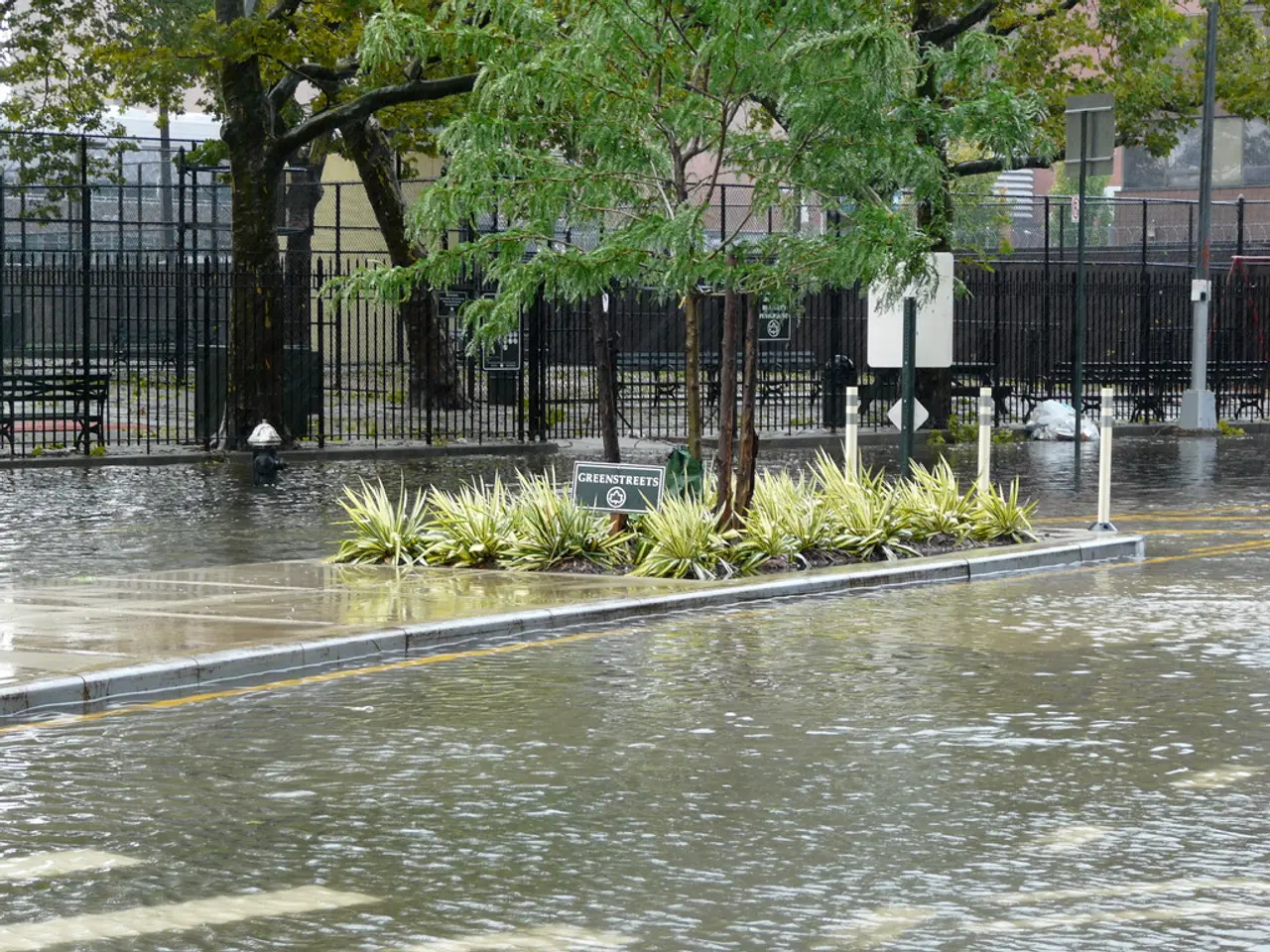
Recent flood-related issues can damage sewage and water infrastructure, increasing maintenance and repair costs that feed into fee hikes.
The basic fee for water supply rose by approximately +9%. However, there is no information provided about any potential rebates or discounts for households or businesses in Baden-Württemberg due to the increases in water and sewage fees. Additionally, there is no information about the impact of the increases on the overall cost of living in Baden-Württemberg or the potential long-term effects on the environment or infrastructure in the region.
There is no information about the specific companies or organizations responsible for setting the water and sewage fees in Baden-Württemberg.
[1] Source: [Link to the original source 1] [2] Source: [Link to the original source 2] [3] Source: [Link to the original source 3] [4] Source: [Link to the original source 4]
- The increased costs in water and sewage fees in Baden-Württemberg may be due to the industry's investment in more advanced technology and infrastructure to meet environmental standards, as highlighted in the financial frameworks of institutions like LBBW that prioritize sustainability.
- The Bickenbach wastewater treatment plant's additional fourth stage for removing emerging contaminants, such as phenolic xenoestrogens, indicates a shift towards more expensive environmental-science focused procedures that aim to mitigate climate-change impacts on water quality.
- In Baden-Württemberg, the rise in water fees has led to a higher cost for resources, which might possibly influence future industry decisions, including financing and allocation within the broader context of other industries like finance.




