
Improved MTA statistics observed across significant sectors during the initial six months of 2025
In the first half of 2025, the Metropolitan Transportation Authority (MTA) has made significant strides in enhancing the transit experience for millions of New Yorkers. The MTA's 2025-2029 Capital Plan, fully funded as part of the New York State budget, is driving these improvements across New York City Transit (NYCT), Long Island Rail Road (LIRR), and Metro-North Railroad.
## Key Achievements
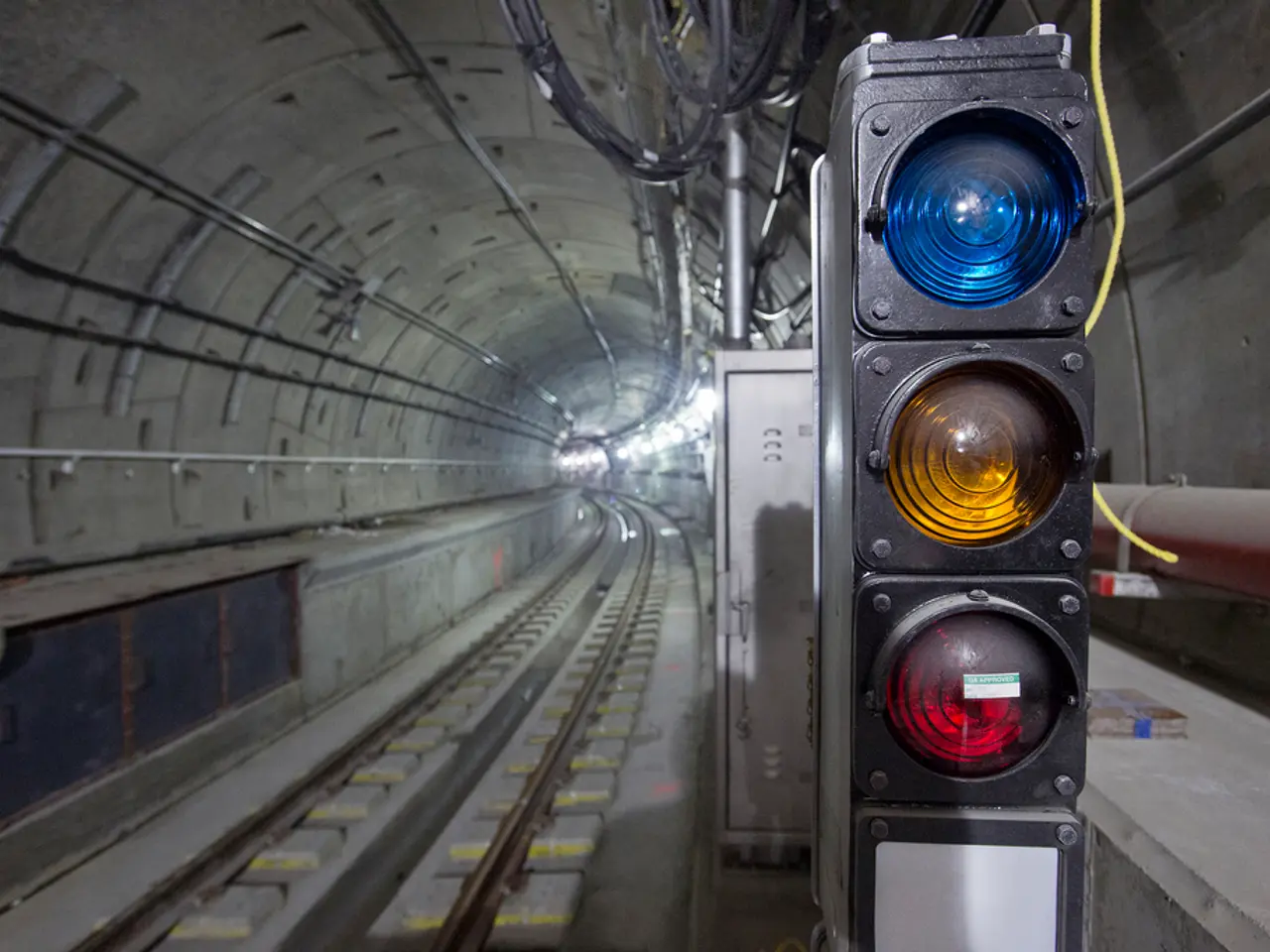
The MTA's capital plan prioritises bringing the system into a state of good repair, focusing on modernisation and accessibility. Significant projects include the development of the Interborough Express, a light rail project connecting Brooklyn and Queens, and the modernisation of signals from four lines per year to seven, thanks to new toll revenue.
The MTA has also approved the purchase of 316 M-9A railcars for LIRR and Metro-North Railroad, improving the fleet's efficiency and capacity. Upgrades to fare gates and payment systems, such as the OMNY contactless payment system, are being fully implemented.
The congestion pricing program has shown a 13% traffic drop and faster crosstown buses, which could positively impact ridership experience by reducing travel times.
## Ridership and Traffic Impact
While specific ridership numbers for the 2025-2029 period are not detailed, these initiatives aim to enhance the overall transit experience. In July 2025, the first post-pandemic days exceeded four million subway riders, setting a new record. LIRR set a new single day post-pandemic ridership record on June 18, 2025, carrying 287,437 customers. Ridership has surged in 2025, with record post-pandemic ridership for subways, buses, and paratransit.
## Customer Satisfaction and On-Time Performance
The plan includes station accessibility upgrades and new electric buses, which are expected to improve customer satisfaction by enhancing the transit environment. In the first half of 2025, performance across NYCT was at historic highs, with weekday subway on-time performance at 83.7 percent, 2.4 percentage points higher than the same time last year. Paratransit delivered an on-time performance rate of 92 percent in June 2025.
Bus service has improved across the city, with service increased on eight express and 15 local routes with high ridership earlier this year. The Queens Bus Network Redesign, which began its first phase June 29, expands 24-hour service to hundreds of thousands of Queens bus riders and includes a $35 million annual investment in more service for the borough.
## Challenges and Future Directions
While the MTA has made significant strides, challenges remain, including managing debt and finding new efficiencies to reduce financial burdens. The plan's focus on modernisation and accessibility is crucial for enhancing customer satisfaction and improving overall transit performance.
New York Gov. Kathy Hochul stated that MTA ridership, performance, and safety are all improving dramatically in 2025, serving nearly six million New Yorkers every day. The MTA's progress in the first half of 2025 sets a promising foundation for the rest of the year and beyond.
- The MTA's purchase of 316 M-9A railcars for LIRR and Metro-North Railroad is part of a broader effort to modernize transportation, improving the efficiency and capacity of the rail-industry.
- As the MTA prioritizes bringing the system into a state of good repair, the Metropolitan Transportation Authority is considering the development of technologically advanced transportation solutions, like the Interborough Express, a light rail project connecting Brooklyn and Queens.
- The MTA's focus on management and financial planning is evident in their capital plan, which aims to maintain the stability of the organization through the reduction of debt and the discovery of new efficiencies in the finance sector.




