
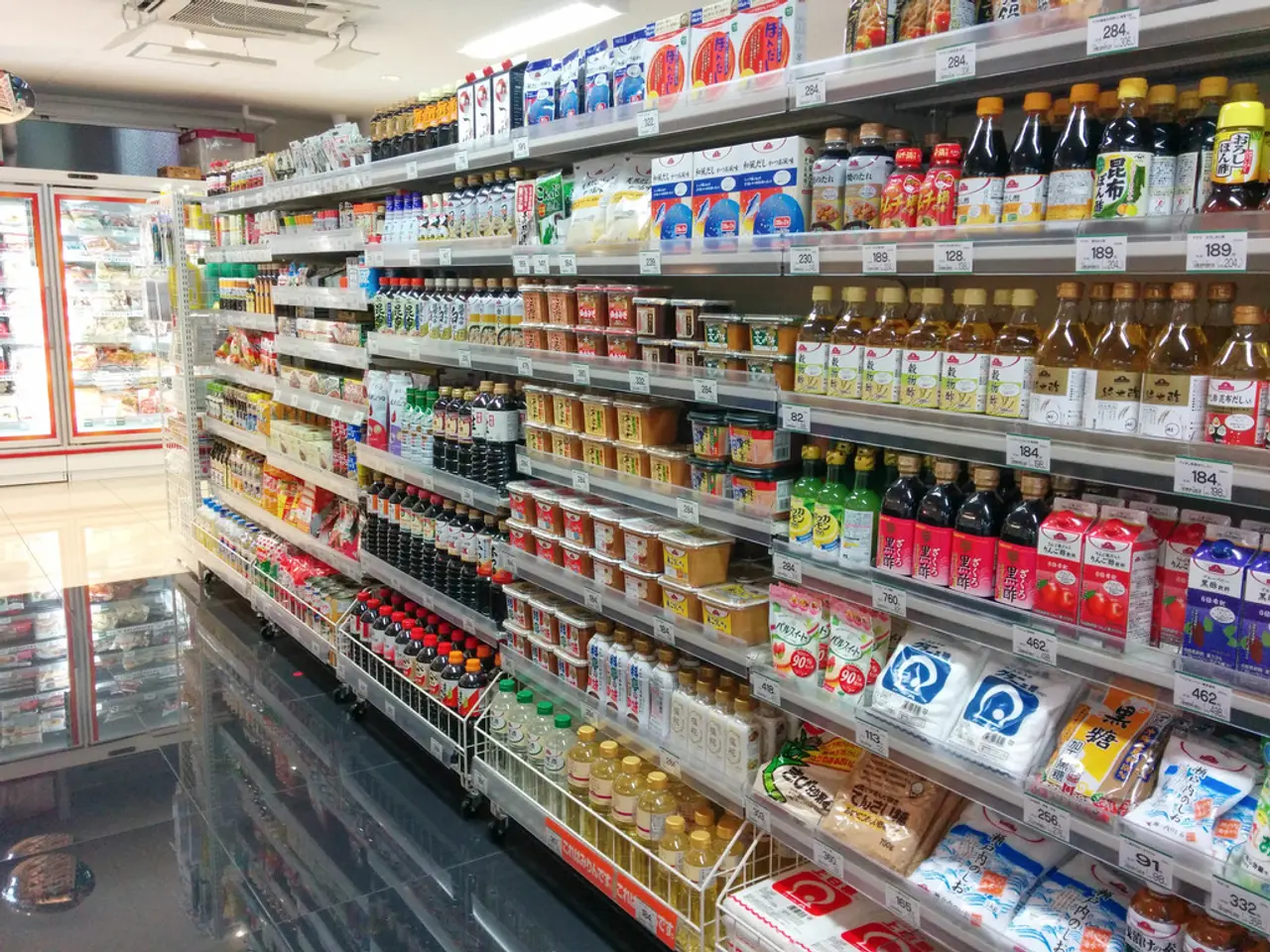
Devices used to regulate sales volume in commercial establishments during the month of May
A Slump in German Retail Sales, Explained
Germany's retail sector experienced a setback in May 2024, as reported by the Federal Statistical Office. When adjusting for calendar and seasonal effects, sales dropped by 1.2 percent compared to April. Despite this decline, sales were still 2.8 percent higher than in May 2024, reflecting an increase of 1.6 percent when considering price changes.
Non-food stores took the hardest hit during this consumption slump, with a 2.2 percent real monthly sales decrease. Food markets, on the other hand, saw a real decline of 1.3 percent. The usually thriving e-commerce sector also recorded a decrease of 1.4 percent. However, they still managed to grow by 9.3 percent compared to the same month last year.
Let's delve deeper into the reasons behind these figures.
A Faltering Non-food Market
Consumer spending on non-essential items weakened, causing non-food stores to struggle. This downturn was influenced by several factors such as inflationary pressures, cautious consumer sentiment, and adverse weather conditions that reduced foot traffic. For example, sectors like fashion saw significant declines, partly because of shifts in consumer priorities and completed home projects sapping demand for non-essential goods [1].
Prioritizing Necessities: Food Markets Struggle
Food markets experienced a drop due to grocery price inflation. As households focused on essential spending, rising food prices squeezed budgets, leading to a reduction in food store sales volumes by about 5% in related contexts [1].
E-commerce in Germany's Retail Landscape
Specific data regarding the e-commerce sector in Germany's May 2024 retail environment was not readily available. However, considering that overall retail sales declined by 0.9% month-on-month [3], it is reasonable to infer that e-commerce may have faced similar challenges, potentially due to consumer caution and inflationary effects.
A broader look at Germany's economy reveals that it started 2025 with some promising growth but encountered challenges like new tariffs and trade tensions, which curtailed export activity and private consumption by the second quarter. Economic uncertainty eroded consumer confidence, contributing to the retail slowdown [2].
In summary, the retail sales decline in Germany during May 2024 was driven by inflation affecting consumer budgets, cautious spending behaviors, and external economic uncertainties. Non-food retail and food markets were particularly affected due to reduced discretionary spending and increased prices, respectively, while e-commerce could have mirrored these overall trends [1][2][3].
[1] Numerous publications, including Die Zeit and Handelsblatt, reported on the factors contributing to the decline in the retail sector.[2] The Guardian and Reuters covered Germany's economic challenges and their impact on the retail sector.[3] Data on overall retail sales was reported by various media outlets, such as The Local Germany and Steeper Economics.
- In an attempt to manage their finances better, consumers in Germany have been prioritizing necessities over non-essential goods, leading to a decline in the business for non-food retailers and affecting their ability to live comfortably.
- The decline in retail sales in Germany, particularly in the e-commerce sector, could be attributed to the overall economic uncertainties and cautious spending behaviors, making it difficult for businesses to thrive and sustain profitability.




