
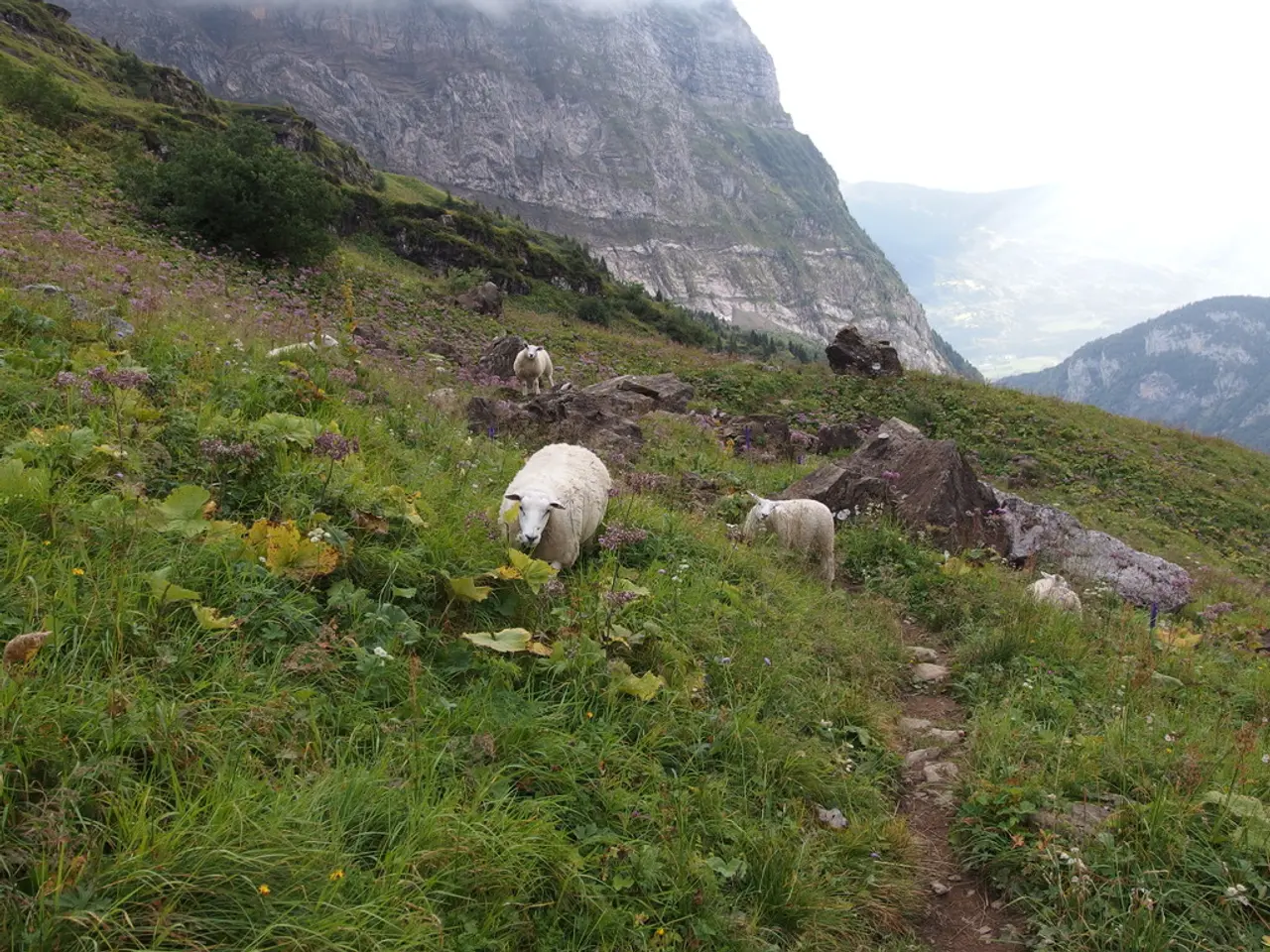
Climate-conscious livestock farming integrated with tourism is trailblazed by Khánh Hòa
In the picturesque landscapes of Khánh Hòa Province, a climate-adaptive goat farming project integrated with eco-tourism is making waves. This innovative initiative, launched in 2023 and set to run until 2025, aims to address the challenges posed by prolonged droughts and water scarcity in the region, while promoting sustainable rural tourism and agricultural transformation.
The project involves six participating households, including that of Y Khen, who now raises 63 goats, cultivates two hectares of fruit trees, and has a small fish pond. Visitors to their farm can enjoy a variety of experiences, from feeding goats and walking along restored forest trails to tasting fresh fruits and learning about local ethnic cultures.
Remarkably, households participating in the project have seen their incomes rise by around 23% compared to traditional farming methods. This uptick is due in part to the development of eco-tourism services, such as homestays and farm tours, which attract both domestic and foreign visitors.
The project emphasises the need for sustainable practices, with farmers adopting climate-resilient livestock models and improving their farms by planting timber trees, fruit trees, and forage grasses, while restoring degraded hillsides. Waste treatment and environmental protection measures are also applied to ensure the sustainability of eco-tourism development.
Experts recommend that livestock farms adhere to strict biosecurity measures, improve waste treatment systems, and follow hygiene standards. Strengthening linkages among farmers, cooperatives, enterprises, and travel agencies is seen as essential to expand and replicate the model in other drought-affected areas.
The project represents a pathway for rural economic growth, climate resilience, and sustainable agricultural-tourism integration. Ongoing support is anticipated from technical agencies and policy frameworks to scale the model and make it a success story in other regions.
[1] Việt Nam News. (2023). Climate-smart goat farming integrated with eco-tourism in Khánh Hòa Province. [online] Available at: https://vietnamnews.vn/economy/945535/climate-smart-goat-farming-integrated-with-eco-tourism-in-khanh-hoa-province.html
[2] Farming First. (2023). Climate-smart goat farming integrated with eco-tourism in Khánh Hòa Province. [online] Available at: https://www.farmingfirst.org/news/climate-smart-goat-farming-integrated-with-eco-tourism-in-khanh-hoa-province/
- The climate-adaptive goat farming project in Khánh Hòa Province is making headlines in both Việt Nam News and Farming First, emphasizing its importance in combating prolonged droughts and water scarcity.
- The project implementation until 2025 involves six households, with one household led by Y Khen, who is now nurturing 63 goats, growing fruit trees, and cultivating a fish pond in an eco-friendly manner.
- This sustainable initiative not only concentrates on climate-resilient farming but also promotes eco-tourism, offering unique experiences like visiting restored forest trails, taste-testing fresh fruits, and learning about local ethnic cultures.
- Surprisingly, households participating in the project witness a 23% income increase compared to traditional farming methods, facilitated by eco-tourism services, such as homestays and farm tours, drawing both domestic and foreign tourists.
- In order to maintain sustainability, farmers are encouraged to adopt climate-resilient livestock models, plant timber trees, fruit trees, and forage grasses, and implement waste treatment and environmental protection measures.
- Expert recommendations extend beyond farming practices, advice that livestock farms adhere to biosecurity measures, enhance waste treatment systems, and maintain hygiene standards to ensure the longevity of the project.
- As the region grapples with the effects of climate change and the necessity for rural economic growth, strengthening connections between farmers, cooperatives, enterprises, and travel agencies is seen as crucial in scaling and replicating the innovative model to other drought-affected regions.
- Both business and science sectors could significantly contribute to the project's success, with technical agencies providing support, policy frameworks facilitating the scaling, and the renewable-energy industry presenting potential opportunities in the region.




